
The Ultimate Guide to AI-Based Forex Trading for Beginners (2026 Edition)
The world of currency trading has undergone a seismic shift. If you had entered the Forex market a decade ago, you’d be staring at complex Japanese Candlestick charts, manually drawing trend lines, and losing sleep over central bank announcements.
Fast forward to 2026, and the landscape is unrecognizable. AI-powered Forex trading has moved from the secretive high-frequency desks of Wall Street directly into the pockets of retail beginners. But with great power comes a steep learning curve.
In this guide, we will explore everything you need to know about AI-based Forex trading, from the basic “how-tos” to the hard truths about risk management in an automated world.
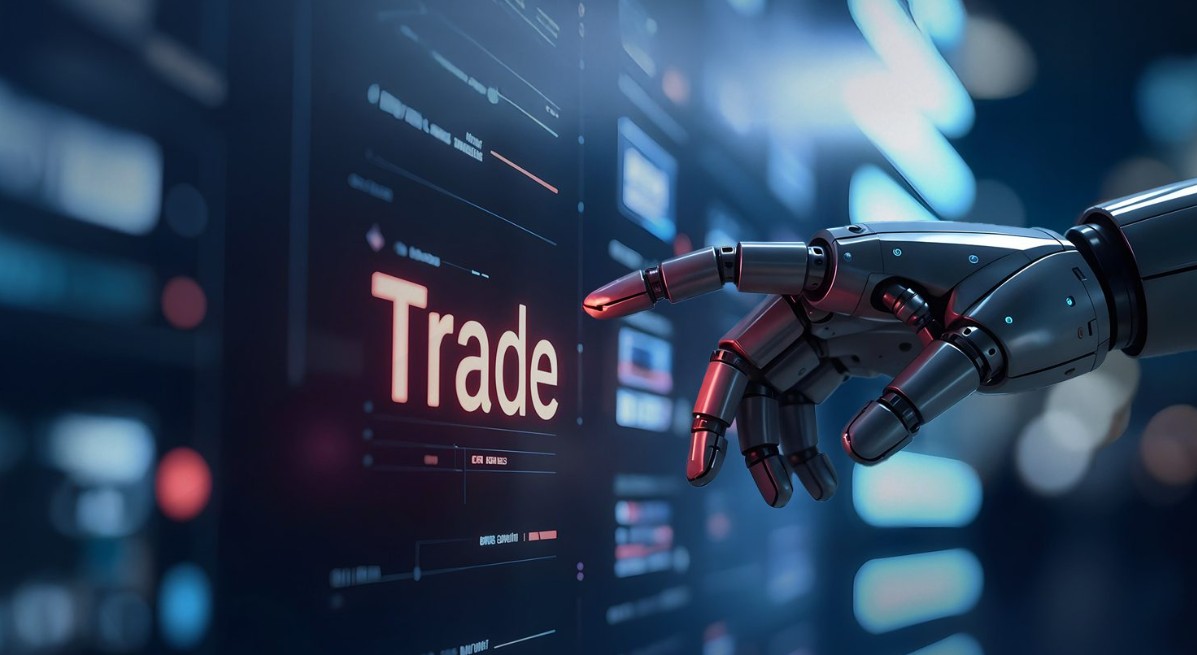
Are AI Useful in Forex Trading? The Short Answer
Before diving into the “how,” we must address the “why.” Are AI useful in Forex trading? Absolutely—but perhaps not in the way you think.
In 2026, AI isn’t a “magic money button.” Instead, it acts as a massive force multiplier. The primary utility of Forex trading and AI integration lies in three critical areas:
- Massive Data Processing: AI can analyze thousands of currency pairs, global interest rates, and economic indicators in milliseconds—capabilities that far exceed human cognitive limits.
- Absolute Emotional Discipline: Unlike humans, AI doesn’t experience “revenge-trading” urges or fear-based hesitation. It follows the pre-defined code regardless of market pressure.
- Advanced Predictive Analytics: Modern Machine Learning (ML) models identify “micro-trends” by cross-referencing decades of historical data with real-time price action to find patterns invisible to the naked eye.
Understanding the Basics: What is AI-Based Forex Trading?
To the uninitiated, AI-based Forex trading sounds like science fiction. In reality, it is the sophisticated application of mathematical models and neural networks to the Foreign Exchange market.
Machine Learning (ML) vs. Traditional Algos
Traditional “Expert Advisors” (EAs) are static. They follow “If-Then” logic (e.g., If Price > Moving Average, then Buy). However, AI use in Forex trading involves Machine Learning, meaning the system “evolves.”
If a specific strategy begins losing efficacy due to a change in market volatility, a Machine Learning model can autonomously adjust its entry parameters to adapt to the new “market regime.”
Natural Language Processing (NLP) & Sentiment
One of the biggest breakthroughs in 2026 is the use of NLP. AI now “reads” the market. It scans:
- Federal Reserve and ECB meeting transcripts.
- Real-time news wires (Reuters, Bloomberg).
- Social media sentiment (X/Twitter, Reddit).
- Economic calendars.
This allows the AI to gauge whether the market is feeling “bullish” or “bearish” and react before the news even hits mainstream retail platforms.
How to Use AI in Forex Trading: A Step-by-Step for Beginners
You no longer need a degree in Data Science to start. Here is the modern path to implementing AI-powered Forex trading effectively.
Step 1: Choose a No-Code AI Platform
The “No-Code” revolution is the biggest trend of 2026. Platforms like AlgosOne or Capitalise.ai allow you to build strategies using plain English.
- Example Prompt: “Buy 1 lot of EUR/USD when the daily RSI is below 30 and the AI news sentiment for the Euro is positive.”
Step 2: Define Your Risk Parameters
An AI is only as safe as the boundaries you set. You must define:
- Max Drawdown: The maximum percentage of your account you are willing to lose before the AI halts trading.
- Position Sizing: Typically, beginners should risk no more than 1% to 2% of their total capital per trade.
- Trailing Stop-Losses: Automated exits that “lock in” profits as the price moves in your favor.
Step 3: Backtesting and Paper Trading
Never go “live” immediately.
- Backtest: Use the AI to run your strategy against the last 5–10 years of market data.
- Paper Trade: Run the AI on a “demo” account for at least two to four weeks. This ensures the AI handles live market “slippage” and broker spreads correctly.
Key Benefits of AI Powered Forex Trading
Why are so many beginners flocking to Forex trading and AI? The advantages are statistically significant:
- 24/7 Market Coverage: The Forex market is open 24 hours a day, five days a week. AI allows you to capture opportunities in the Tokyo or London sessions while you are asleep in New York.
- Eliminating the “Human Element”: Greed and fear cause 90% of retail trader failures. AI operates on pure logic and statistical probability.
- High-Speed Execution: In scalping, milliseconds represent the difference between profit and loss. AI executes orders at speeds a human finger simply cannot match.
- Portfolio Diversification: An AI can manage 20 different currency pairs simultaneously, something a manual trader would find mentally exhausting.
The Risks: What They Don’t Tell You on Social Media
While AI use in Forex trading is revolutionary, it isn’t a guaranteed profit machine. You must be aware of:
- Over-Optimization (Curve Fitting): Sometimes an AI finds a pattern in historical data that was just a coincidence. It looks amazing in a backtest but fails in live markets.
- Black Swan Events: AI is trained on past It cannot predict a sudden geopolitical conflict or a “flash crash” that has no historical precedent.
- The “Black Box” Problem: Some AI tools are too complex. If you don’t understand why the AI is making a trade, you won’t know when to turn it off.
Top AI Strategies for Beginners in 2026
If you are looking for specific ways on how to use AI in Forex trading, these three strategies are currently leading the market:
1. Sentiment-Based Scalping
This uses NLP to monitor “The Wisdom of the Crowd.” If there is a sudden spike in positive sentiment for the British Pound (GBP) following a GDP release, the AI enters a quick “buy” to ride the momentum for 10-15 pips.
2. Mean Reversion with AI Volatility Filters
Standard mean reversion assumes prices will return to an average. AI improves this by filtering out “fakeouts.” The AI looks at volume and institutional flow to decide if a price move is a genuine breakout or just a temporary spike.
3. Predictive Journaling
This is the “Coach” approach. The AI doesn’t trade for you; it watches you trade. It analyzes your manual history and provides insights like: “You have a 70% loss rate when trading USD/JPY after 4 PM EST. Suggest avoiding this time window.”
Choosing the Right AI Forex Tools
When searching for AI-based Forex trading software, prioritize these “Must-Have” features:
- Verified Track Records: Look for integrations with third-party auditors like MyFXBook.
- Regulation: Ensure your AI provider or broker is regulated by the FCA, ASIC, or CFTC.
- Transparency: Choose platforms that explain their logic (Explainable AI) rather than “Black Box” systems.
- Ease of Use: As a beginner, look for “Drag-and-Drop” or “Natural Language” interfaces.
Conclusion: The Future is Hybrid
As we navigate 2026, the most successful traders aren’t those who hand everything over to a machine, nor are they the ones ignoring technology entirely. The winners are Hybrid Traders.
They use AI-powered Forex trading to handle the heavy lifting—the data crunching, the 3 AM monitoring, and the complex backtesting—but they keep their human hands on the steering wheel to make high-level decisions during major global shifts.
AI use in Forex trading is a journey, not a destination. Start small, stay skeptical of “get rich quick” promises, and use these tools to build a sustainable, disciplined trading career.