- The dollar is down as global risk appetite is up.
- Gold enjoys central banks’ support.
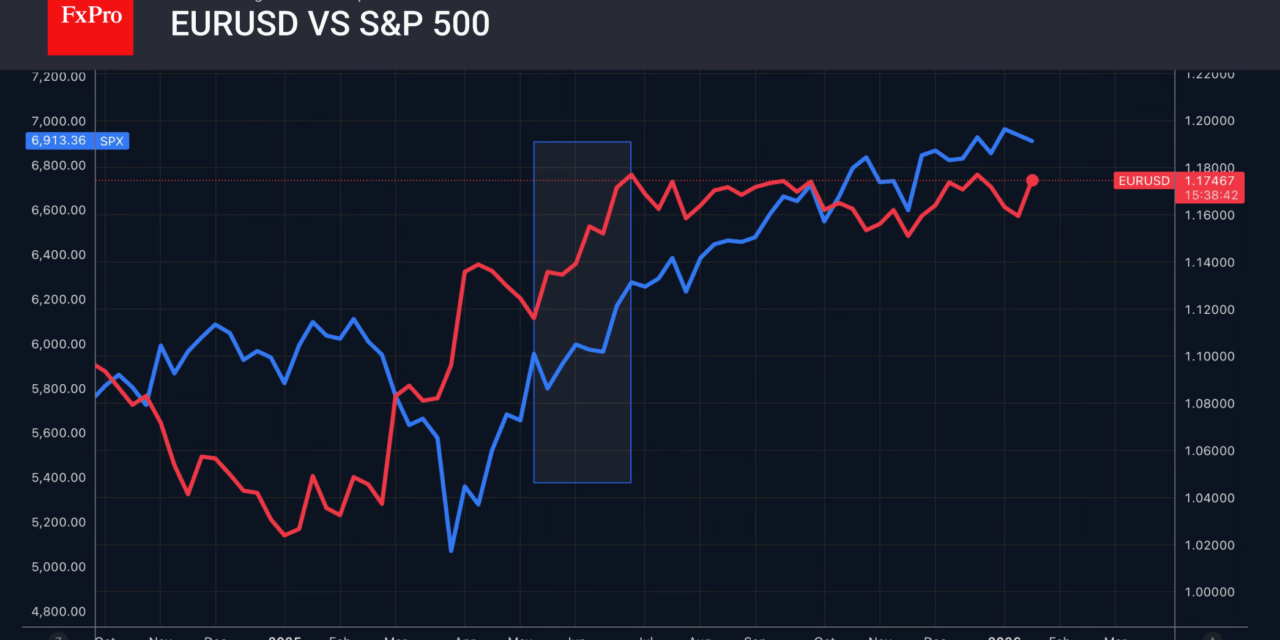
History may rhyme, but this time it’s playing in fast-forward. Investors recognise how this tale ends. After Donald Trump backed down from his tariff threats against Europe, the “sell America” trade gave way to renewed appetite for U.S. assets. The dollar strengthened—but unlike the three-week rally in April and May, this rebound lasted just a single day.
The rebound in US stock indices from their April lows was strikingly swift. Simultaneously, non-residents hedged their currency exposure by selling dollars, a move that propelled EURUSD past 1.17—a level around which it has since consolidated.
Last spring, Europe was impressed by Germany’s fiscal stimulus and increased EU defence spending. In addition, the US economy now looks much stronger than it did in 2025. In July-September, GDP accelerated to 4.4%. A leading indicator from the Federal Reserve Bank of Atlanta forecasts its expansion by an annualised rate of 5.4% in October-December.
The labour market has stabilised, as shown by yesterday’s weekly Unemployment Claims data. Inflation is significantly above target. Under these conditions, the Fed could continue sitting on the sidelines until at least June. This expected monetary policy break until the summer gives the US dollar an important advantage.
Growing global risk appetite and strong Australian labour market statistics have pushed the AUDUSD to 15-month highs. Unlike most other major central banks, the RBA may raise its key rate in 2026, which makes the Aussie a favourite.

The Bank of Japan’s decision to keep its overnight rate at 0.75% and the sharp slowdown in inflation in December from 3% to 2.4% have been catalysts for the yen’s weakening. Investors do not expect monetary policy to tighten until the summer, and the wide interest rate differential with the US creates a solid foundation for the USDJPY rally to continue.
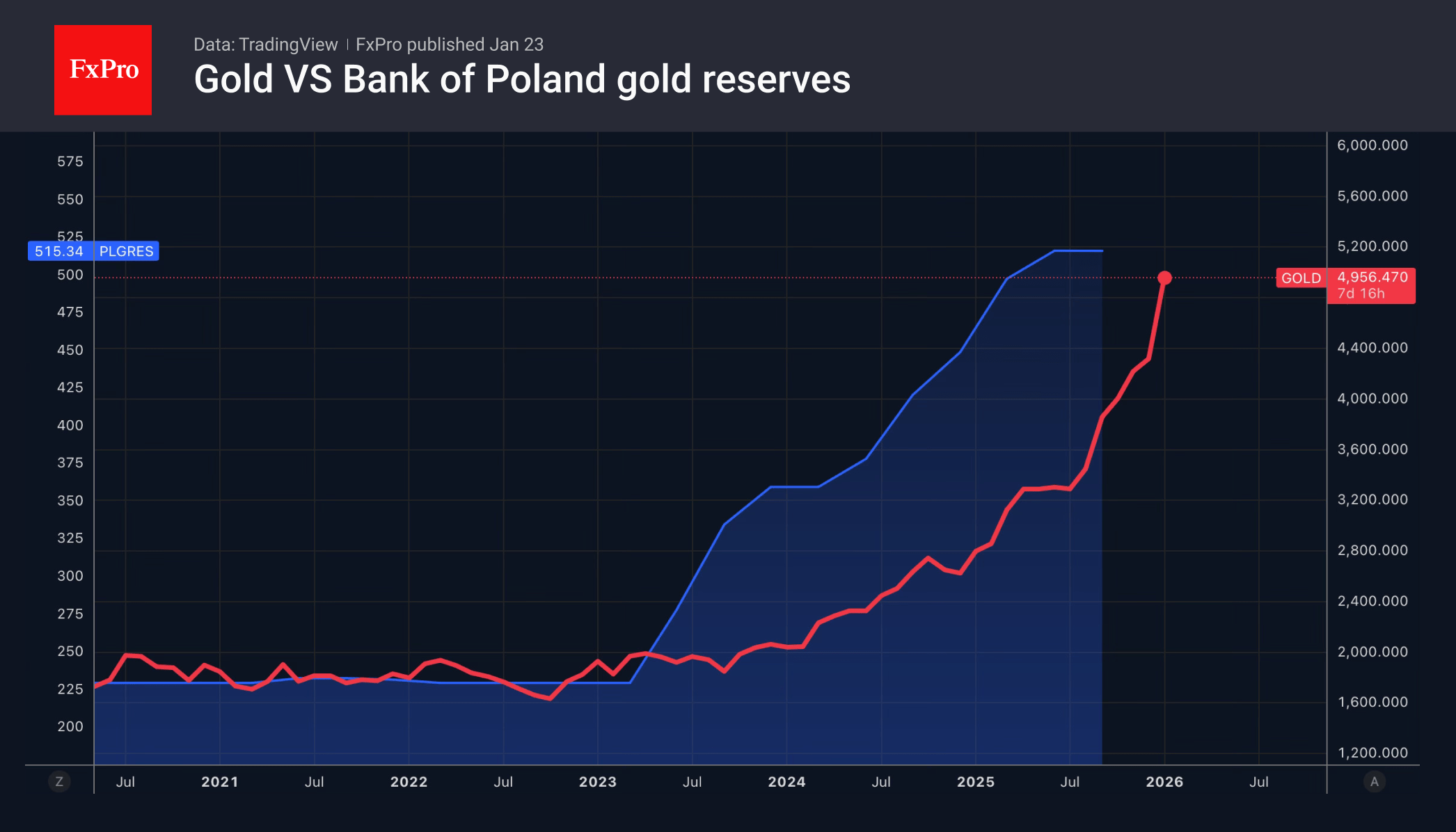
Gold took advantage of the USD, coming within striking distance of the psychologically important $ 5,000-per-ounce mark. Against the backdrop of uncertainty in White House policy and growing geopolitical risks, central banks are actively buying up bullion. For example, the Bank of Poland has announced its intention to increase its precious metal reserves by 150 tonnes.
The FxPro Analyst Team