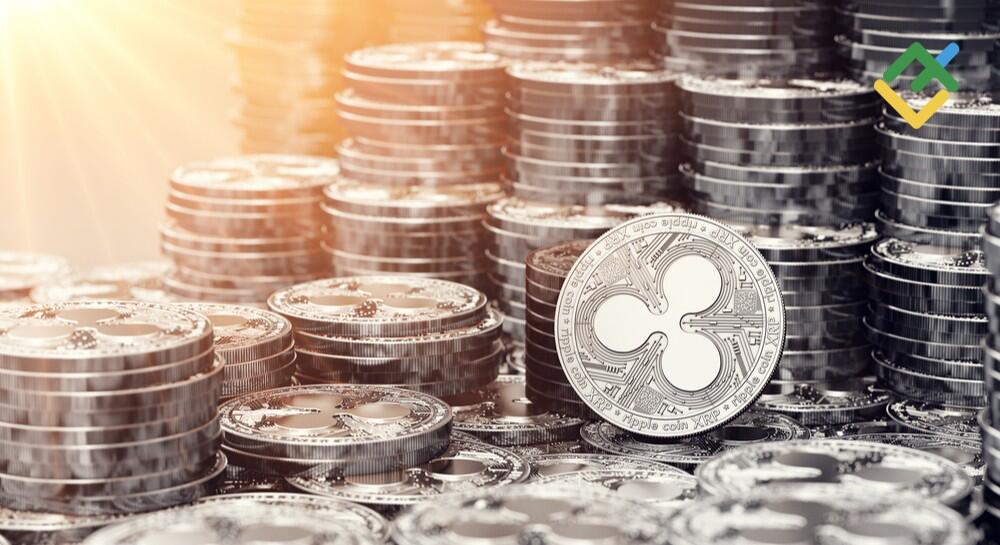

XRP is the native token of the Ripple network, which is a payment system for financial transactions. While it may not be as well-known as Bitcoin, it ranks among the top 10 cryptocurrencies by market capitalization. XRP stands out with its impressive features, including fast transaction speeds and low fees.
The crypto industry is constantly evolving, and new coins are emerging all the time. In such a fast-moving environment, traders may easily overlook promising investment opportunities. To make informed investment decisions, read this guide to Ripple (XRP) and explore its purpose, advantages, potential risks, and other characteristics.
The article covers the following subjects:
Major Takeaways
- XRP is one of the oldest and most technologically sophisticated altcoins, designed not for retail users but for the banking sector and cross-border payments.
- XRP’s momentum stems from the development of the Ripple network and the widespread adoption of its solutions by banks and fintech companies worldwide.
- The lengthy legal battle between the SEC and Ripple has concluded. In 2025, the two parties reached a settlement declaring that XRP is no longer considered a security when traded on public exchanges. Eventually, this development bolstered the token’s price.
- The XRP price has historically been less volatile than other altcoins, making it an enticing asset for medium-term strategies.
- The prospects for XRP largely depend on the success of RippleNet, On-Demand Liquidity (ODL), and institutional adoption of the token.
- Main risks include regulatory changes in the US and other countries, dependence on Ripple’s operations, and network decentralization issues.
- XRP is not the best choice for aggressive short-term trading. Instead, it works better in moderately conservative strategies, with an investment horizon of several months to years.
History of Ripple (XRP)
Ripple Labs was established in 2012 to facilitate fast and low-cost international payments using RippleNet, with the XRP token serving as a liquidity tool. Initially, the price of XRP stayed below $0.01, but in 2017, growing interest in blockchain technology caused a significant surge, pushing the asset to an all-time high of 3.65703 on 18.07.2025.
On December 22, 2020, the SEC filed a lawsuit against Ripple Labs, alleging that the company sold unregistered securities. In July 2023, Judge Analisa Torres ruled that XRP sales on public exchanges did not constitute investment contracts, meaning the token was not considered a security in retail transactions, while sales to institutional investors remained subject to securities law. In August 2025, the case concluded when both parties withdrew their appeals, and Ripple agreed to pay a $125 million fine.
The current XRP price is $2.02750. Its complete historical price movement is presented below.
Factors Affecting XRP’s Price
The XRP price is notoriously volatile, making it difficult to predict its movement. Therefore, it is essential to be aware of factors that may influence this asset’s value.
- The state of the cryptocurrency market. Some experts argue that the XRP price correlates with other cryptocurrencies. Since Bitcoin remains the most popular digital currency and ranks first in terms of market capitalization, significant changes in BTC will affect other cryptocurrencies, including XRP.
- Ripple technology. Ripple’s goal is to make international money transfers fast and cost-effective. Before RippleNet appeared, SWIFT was the only system for cross-border payments. Now, thanks to the growing popularity and implementation of Ripple technology, the token is poised to appreciate.
- XRP crypto whales. These are investors who hold large amounts of the token. Their moves can affect overall market sentiment and drive price swings.
- XRP ETF approval and institutional adoption. The approval of an ETF product, such as the ProShares Ultra XRP ETF, authorized on July 14, 2025, is expected to attract large investors and hedge funds.
How Is Ripple (XRP) Different From Other Cryptocurrencies?
Ripple (XRP) sets itself apart from competitors like Bitcoin, Ethereum (ETH), and Litecoin (LTC) thanks to several distinctive features. Let’s explore what makes Ripple unique.
XRP Does Not Use a Blockchain
XRP operates on a unique network that diverges from traditional blockchain technology. It is built on the XRP Ledger, a decentralized, publicly accessible system maintained by an open-source developer community. The main advantages of this system are:
- very high transaction speed (up to 1,500 transactions per second);
- open source code, accessible to everyone;
- eco-friendliness (low energy consumption);
- economic efficiency.
XRP Is Often Viewed as Centralized
Although some consider XRP to be a centralized asset, the XRP Ledger operates as a decentralized network with its own unique characteristics. The XRPL uses a consensus protocol in which independent validators confirm transactions without receiving block rewards. Despite this decentralized design, Ripple’s significant role in the ecosystem and ownership of large XRP reserves lead many to perceive XRP as more centralized than other cryptocurrencies.
You Cannot Mine XRP
In 2012, when XRP was first introduced to the public, it was announced that the total supply would be limited to 100 billion coins and that tokens could not be mined. Currently, there are approximately 45.4 billion XRP in circulation, with the remaining coins yet to be released.
Why Should I Invest in Ripple?
XRP is one of the most popular cryptocurrencies among traders. Let’s examine the main advantages of XRP.
Affordability
XRP’s affordable price makes it accessible to traders with smaller capital. Even with just $100, it is possible to open a potentially profitable position while keeping risk relatively low.
Market Capitalization
Ripple (XRP) is one of the largest cryptocurrencies, boasting a market capitalization of approximately $132.65 billion. It ranks fourth among cryptocurrencies, trailing behind Tether (USDT). This positioning indicates strong confidence among traders in XRP, contributing to its stability.
Fast and Cost-Efficient Transactions
Ripple’s founders took inspiration from Bitcoin, aiming to make international transfers faster, cheaper, and more efficient. With fees under $0.01 and speeds of around 1,500 transactions per second, over 1,000 times faster than Bitcoin, Ripple has become increasingly appealing to major financial institutions.
Broad Adoption
Ripple technology enables quick, secure, and cheap transactions, making XRP sought after among large financial institutions and banks. Ripple even outperforms Bitcoin in some respects. Its partners include MoneyGram, American Express, and others.
CBDCs Platform
Ripple offers users its own Central Bank Digital Currency (CBDC) platform. This innovative solution provides reliable security and high transaction speeds for various market participants, including major financial institutions.
What Are the Potential Risks of Investing in Ripple?
Trading Ripple involves relatively high risks. Therefore, it is crucial to consider not only its advantages but also its disadvantages.
It is Less Decentralized
Decentralization is a core principle of cryptocurrencies, yet XRP differs from typical crypto assets because it does not use a traditional blockchain. Instead of Bitcoin’s or Ethereum’s model, Ripple relies on a peer-to-peer consensus protocol and a predefined list of validators, which leads some to question how decentralized XRP truly is.
No New XRP Will Be Issued
Scarcity and supply play a major role in the pricing of any crypto asset. Bitcoin’s fixed supply can drive future demand, while Ethereum’s unlimited supply is managed through gradually slowing issuance. XRP follows a different model: all 100 billion tokens were pre-mined, with only part of them currently in circulation. The concern is that large releases of the remaining supply at the wrong time may put downward pressure on XRP’s price.
Ripple and XRP Are Not the Same Thing
Ripple and XRP are not always interchangeable. Apart from being the name of the coin, Ripple is also the name of the entire company, which offers various services to its customers. Many traders mistakenly believe that the growing number of Ripple partners directly influences the adoption of XRP. However, most of them are primarily interested in Ripple’s blockchain technology, rather than its cryptocurrency.
A Big Share of XRP Belongs to Ripple
Ripple holds a huge number of issued XRP and maintains a large reserve of pre-mined tokens for future release. While this approach helps the company manage market uncertainty and can support price stability, it also raises concerns among traders. Investors worry that a sudden release of a large amount of XRP into circulation could dilute the supply and negatively impact the coin’s value.
Ways to Invest in Ripple
If you want to add Ripple (XRP) to your investment portfolio, you can choose one of two methods.
- Buy and hold. With this approach, investors buy XRP and hold it, hoping for long-term price growth. This method is simpler than trading, but it still requires certain knowledge and skills, as the price of XRP is very volatile.
- Trading. This method allows you to profit from price fluctuations. However, remember that higher potential returns come with significant risks, especially for inexperienced traders. In addition to spot trading, investors can also trade XRP futures, which offer leverage and the ability to increase position size.
Ripple vs SEC: Legal Status
The lawsuit between Ripple Labs and the US Securities and Exchange Commission (SEC) commenced on December 22, 2020. The SEC accused the company of selling the XRP token as an unregistered security.
In July 2023, Judge Analisa Torres issued an interim ruling that XRP sales to private investors were not considered investment contract transactions, meaning that the tokens were not classified as securities. However, sales to institutional investors were considered as such.
The case was finally closed on August 7, 2025, when both parties, Ripple and the SEC, officially withdrew their appeals, ending the long-running legal battle.
Under the final agreement, Ripple agreed to pay a $125 million fine and comply with court restrictions on institutional sales of XRP.
Consequences for the Market
- The resolution of the case alleviated a significant regulatory risk for XRP and the broader US cryptocurrency industry, which in turn bolstered investor confidence and fueled market growth.
- Court rulings have set a precedent for classifying crypto assets and creating a clearer legal framework.
- However, restrictions on institutional sales of XRP remain in place, limiting Ripple’s upside potential.
- Despite this victory, the industry is still awaiting further regulatory decisions and regulation of the cryptocurrency market, particularly regarding institutional investments.
XRP ETF Approval 2025
In 2025, the first exchange-traded funds (ETFs) focused on XRP were introduced. The Canary Capital XRP ETF (ticker: XRPC) was officially launched on November 13, 2025, and recorded approximately $58 million in trading volume on its first day, the highest first-day volume among all ETF launches in 2025.
Earlier, on September 18, 2025, the REX-Osprey XRP ETF (ticker XRPR) was started on the Cboe exchange, gaining a trading volume of about $24 million in the first 90 minutes. Besides, the Bitwise XRP ETF (ticker XRP) began trading on November 20, 2025, on the NYSE.
These launches became possible thanks to the earlier settlement between Ripple Labs and the SEC, which brought much-needed legal clarity to the market and allowed institutional XRP-based products to enter broad circulation.
ETFs enable investors to invest in XRP without directly owning the cryptocurrency, which increases the asset’s liquidity and positively affects its price.
The introduction of XRP ETFs may lead to:
- increased trading activity in traditional financial markets;
- more capital coming in through different funds;
- stronger XRP as a financial asset, not just a cryptocurrency token;
- a possible reduction in volatility due to the inflow of institutional funds, yet increasing correlation with traditional markets.
The launch of the XRP ETFs is a significant catalyst for growth in financial markets. However, it is essential to consider the associated risks, including competition from other cryptocurrency ETFs, dependence on market conditions, and regulatory challenges.
Is Ripple a Good Long-Term Investment?
Ultimately, each investor must decide for themselves by weighing the pros and cons of XRP against their own experience. In general, Ripple can be a promising long-term investment, as its limited token supply may accelerate price growth over time.
Conclusion
XRP is a cryptocurrency used on the RippleNet network and built on the XRP Ledger, which works differently from traditional blockchains. Because of this, Ripple’s level of decentralization is often questioned. Unlike many other cryptocurrencies, XRP cannot be mined, and its total supply is capped at 100 billion coins.
This asset distinguishes itself from its competitors with its high transaction speed and low costs. Its price is also relatively low, which makes the token more accessible.
However, XRP, like other cryptocurrencies, is a highly volatile asset, and predicting its future price is challenging. Thus, before making trading decisions, it is crucial to conduct fundamental and technical analysis to trade profitably.
Price chart of XRPUSD in real time mode
The content of this article reflects the author’s opinion and does not necessarily reflect the official position of LiteFinance broker. The material published on this page is provided for informational purposes only and should not be considered as the provision of investment advice for the purposes of Directive 2014/65/EU.
According to copyright law, this article is considered intellectual property, which includes a prohibition on copying and distributing it without consent.