
COT Reports and Institutional Data Reveal the Weekly Trend
In the high-stakes world of Forex, most retail traders are essentially flying blind, staring at candlesticks and moving averages while wondering why the market suddenly reversed just as their “perfect” setup triggered. If you’ve ever felt like a small fish in a sea of sharks, it’s because you are. However, the sharks leave a trail.
As a Forex educator, I often tell my students that if price action is the “what,” the COT report is the “who” and the “why.” Released every Friday by the Commodity Futures Trading Commission (CFTC), this report provides a breakdown of each Tuesday’s open interest in the futures markets.
In this deep dive, we will decode the COT report, identify the players, and learn how to use this institutional data to forecast weekly trends with the precision of a Wall Street insider.
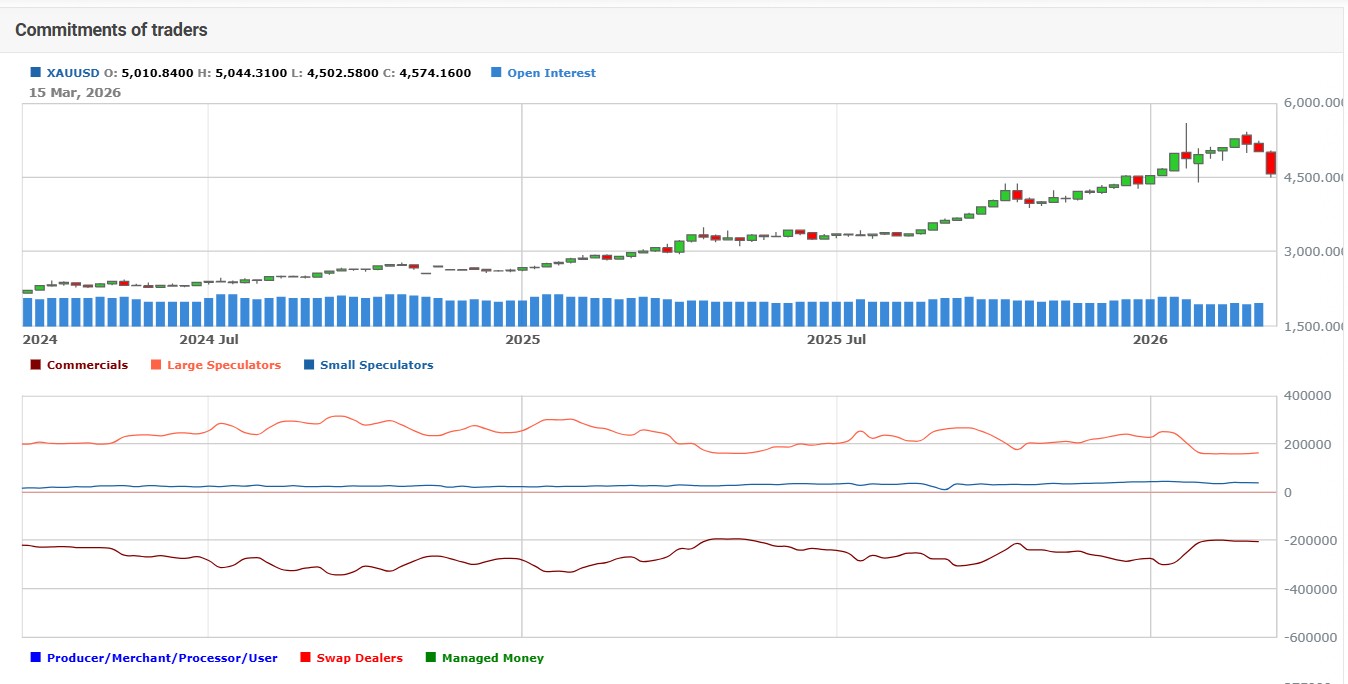
1. What is the COT Report? (And Why Should You Care?)
The COT report is a weekly publication that shows the aggregate holdings of different participant groups in the U.S. futures markets. While the Forex market itself is decentralized (OTC), the currency futures traded on the Chicago Mercantile Exchange (CME) serve as a highly accurate proxy for the broader spot market.
Why It’s Your Secret Weapon
- Transparency: It levels the playing field. You see exactly how many contracts the “Smart Money” is holding.
- Sentiment extremes: It identifies when a trend is “overcrowded,” signaling an imminent reversal.
- Trend Confirmation: It allows you to align your trades with the path of least resistance—the path paved by billions of dollars.
2. Meet the Players: Who is Moving the Market?
To understand the data, you must understand the motivations of the people behind the numbers. The CFTC categorizes traders into three primary groups:
A. The Commercials (The “Hedgers”)
These are the big players—multinational corporations (like Apple or Toyota) and large banks.
- Their Goal: They aren’t in the market to “profit” from a price move in the traditional sense; they are there to hedge risk.
- Behavior: They are typically contrarians. When prices are high, they sell to lock in future prices. When prices are low, they buy.
- Trading Signal: They are often the most “correct” at market turning points, but they can be “wrong” for a long time during a strong trend.
B. The Non-Commercials (The “Large Speculators”)
This is the group we care about most. These are Hedge Funds, Commodity Trading Advisors (CTAs), and massive institutional investors.
- Their Goal: Pure profit.
- Behavior: They are trend followers. They have the capital to move markets, and they tend to pile into a position as a trend gains momentum.
- Trading Signal: We want to trade with them during a trend and watch for when they reach “extreme” positions, which suggests the trend is exhausted.
C. Non-Reportable (The “Small Speculators”)
This is us—the retail crowd.
- Behavior: Historically, this group is consistently on the wrong side of the market at major turning points.
- Trading Signal: Often used as a “contrary indicator.” If retail is 90% long, it’s usually time to look for shorts.
Player Comparison Table
|
Feature |
Commercials |
Non-Commercials |
Small Speculators |
|
Primary Identity |
Hedgers / Producers |
Hedge Funds / Banks |
Retail Traders |
|
Market Strategy |
Mean Reversion / Hedging |
Trend Following |
Random / Emotional |
|
Price Correlation |
Negative (Contrarian) |
Positive (Follows Trend) |
Negative (Late to Trend) |
|
Reliability |
High at extremes |
High during trends |
Low |
3. The Core Metric: Calculating “Net Positioning”
The raw COT report gives you “Long” and “Short” contract counts. To make this data actionable, we calculate the Net Position.
$$Net Position = Long Contracts – Short Contracts$$
- If the result is positive, the group is Net Long.
- If the result is negative, the group is Net Short.
By tracking the change in Net Position week-over-week, we can see if the “Smart Money” is increasing their conviction or liquidating their positions.
Pro Tip: Look for the “Flip.” When Non-Commercials move from Net Short to Net Long for the first time in months, it often signals the birth of a multi-month bullish trend.
4. How to Read the Report: Legacy vs. Disaggregated
When you visit the CFTC website, you’ll see several versions of the report. For Forex traders, the two most important are:
The Legacy Report
This is the “classic” view. It breaks the market down into Commercials and Non-Commercials. It’s the easiest to read and provides a high-level overview of the major players.
The Disaggregated Report
Introduced in 2009, this provides more granular detail, breaking “Commercials” into:
- Producer/Merchant/Processor/User: Those who handle the physical commodity.
- Swap Dealers: Entities that deal primarily in swaps to hedge their own risk.
- Managed Money: The hedge funds (this is where the “real” speculator data lives).
- Other Reportables: Large traders who don’t fit the other categories.
For most weekly trend analysis, the Managed Money section of the Disaggregated report is the gold standard for tracking institutional momentum.
5. Decoding the Signals: The 3 Pillars of COT Analysis
Pillar 1: Trend Confirmation
If the price of EUR/USD is making higher highs and higher lows, you want to see the Non-Commercials (Managed Money) increasing their Net Long positions.
- Bullish Confirmation: Price Increasing + Net Longs Increasing.
- Bearish Confirmation: Price Decreasing + Net Shorts Increasing.
If the price is rising but institutional long interest is flatlining or decreasing, the trend is “hollow” and likely to fail.
Pillar 2: Extreme Sentiment (The Rubber Band Effect)
The market is like a rubber band. The further the speculators stretch it in one direction, the more violently it will eventually snap back.
When Non-Commercial positions reach multi-year highs or lows, the market is “overcrowded.” Since there is no one left to buy (or sell), the path of least resistance is a reversal.
Pillar 3: The COT Index (Normalizing the Data)
Raw contract numbers are hard to compare across different years. To solve this, we use the COT Index, which scales the data from 0 to 100 over a specific period (usually 26 or 52 weeks).
$$COT Index = \frac{Current Net – Minimum Net (n)}{Maximum Net (n) – Minimum Net (n)} \times 100$$
- Index > 80: Market is extremely bullish (watch for a top).
- Index < 20: Market is extremely bearish (watch for a bottom).
6. Step-by-Step: Incorporating COT into Your Weekly Workflow
You shouldn’t use the COT report as a timing tool. It’s a compass, not a GPS. Here is how to integrate it into your trading week:
Friday: The Data Release
The CFTC releases the data at 3:30 PM EST every Friday.
- Open your COT charting tool (or Excel sheet).
- Update the Net Positions for the USD and the major currencies (EUR, GBP, JPY, AUD, CAD, CHF, NZD).
- Identify which currencies the institutions are buying and which they are dumping.
Saturday/Sunday: The Synthesis
Combine the COT data with the US Dollar Index (DXY).
- Is the “Smart Money” heavily Long on USD?
- Are they heavily Short on the JPY?
- The Trade Idea: Look for a Long USD/JPY position for the coming week.
Monday: The Execution
Now that you have your “Bias” (e.g., Bearish GBP/USD), you go to your 4-hour or 1-hour chart.
- Wait for price to reach a resistance level.
- Look for a bearish price action trigger (Engulfing bar, Pin bar).
- You now have the confidence that the “Big Boys” are on your side.
7. Common Pitfalls: Why Retail Traders Get COT Wrong
1. The Time Lag
The COT report is released on Friday, but the data was collected on the preceding Tuesday. That’s a 3-day lag. If a massive geopolitical event happens on Wednesday, the Friday COT report won’t reflect it yet.
- Solution: Use COT for the “Big Picture” trend, not for scalping news.
2. Misinterpreting Commercials
Many beginners think that because Commercials are “Smart Money,” they should copy their trades. Remember: Commercials are often buying as the price drops. If you copy them, you will be catching falling knives.
- Solution: Focus on the Speculators for trend direction, and use Commercials only to spot major long-term floors/ceilings.
3. Ignoring Open Interest
Open Interest is the total number of outstanding contracts that have not been settled.
- Rising Price + Rising Open Interest: Strong trend.
- Rising Price + Falling Open Interest: The trend is dying; traders are closing positions.
8. Case Study: The Great EUR/USD Reversal
Let’s look at a hypothetical (but common) scenario.
- Price Action: EUR/USD has been in a downtrend for 6 months. It’s hitting a major support level at 1.0500.
- COT Data: The “Managed Money” (Speculators) are at a 3-year record Net Short position. Their COT Index is at 2%.
- Commercials: The Commercials have started aggressively buying, reaching a 3-year record Net Long position.
- Interpretation: The speculators are “all in” on the short side. There is no one left to sell. The Commercials are hedging for a move higher.
- Result: Two weeks later, the Euro rallies 400 pips as speculators are forced to “short squeeze” (buy back their positions) to exit.
9. Conclusion: Bridging the Gap
Decoding the COT report is the difference between guessing where the market might go and knowing where the money is actually flowing. By tracking the Non-Commercials, calculating Net Positions, and identifying sentiment extremes, you transform from a reactive trader into a proactive one.
The COT report tells you where the big ships are turning. Your job as a Forex trader isn’t to stop the ship or predict its every wiggle—it’s to jump on board once it’s pointed in the right direction.
Remember: Trade with the trend, but be wary of the crowd.